
Baby Safety Month in the Philippines: Simple Ways to Babyproof Your Home
Your little ones are curious and active explorers. That’s why keeping them safe starts with the little things you do at home every day.
September is Baby Safety Month in the Philippines, a timely reminder for everyone, especially parents and caregivers, to make a conscious effort to create safer surroundings where babies play, explore, and sleep.
When should parents and caregivers start babyproofing their home? It’s best to do so as early as five to six months, before your baby begins crawling.
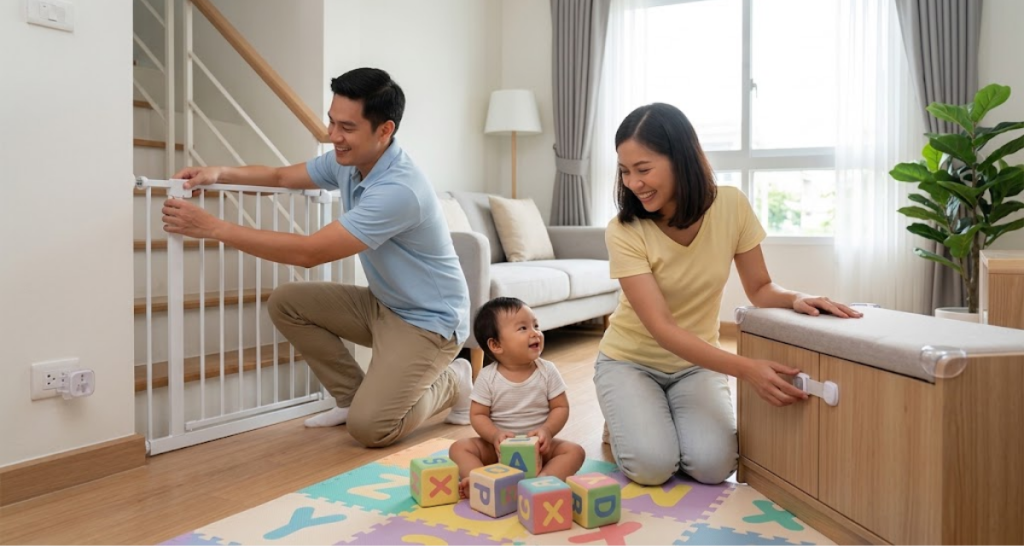
Safety Begins at Home
Growing babies are naturally curious, and their eagerness to explore grows as they start crawling and walking. These exciting stages can expose babies to safety risks.
At VidaCure Pharmacy, your trusted and affordable pharmacy in the Philippines, we believe protecting your little ones is a shared responsibility. Here are some practical tips to create a safer environment for your babies.
- Promote a safe sleeping space. Choose a sturdy, safety-certified crib or bassinet with a firm, flat mattress and snug fitted sheet. To help reduce the risk of Sudden Infant Death Syndrome (SIDS), keep the baby’s sleeping area free of pillows, bumpers, blankets, stuffed toys, and other loose items, especially during the first 12 months.
- Keep small objects out of reach. Coins, buttons, small toy parts, batteries, and other tiny items can easily become choking hazards. Place them out of reach of little hands.
- Inspect toys. Make it a habit to check old and new toys for sharp edges, breakage, loose parts, or peeling paint. Check toy labels to make sure they are age-appropriate. Do the same for hand-me-down toys and check for wear-and-tear. Remove and throw away the toy packaging before giving it to a young child.
- Practice safe feeding. Mash or cut food into small, age-appropriate pieces to help reduce the risk of choking. UNICEF recommends slicing grapes and cherry tomatoes lengthwise. The agency also discourages giving young children nuts, popcorn, and hard candy. Children should also eat while sitting upright, not while walking, running, playing, or lying down. Always supervise your baby during meals.
- Learn first aid for infant choking. Knowing how to respond if your baby chokes can help parents and caregivers stay calm and act quickly when it matters most. If you’re familiar with the heimlich maneuver, keep in mind that this method is not recommended by healthcare providers for infants 12 months or younger. Instead, it is advisable to do backslaps, also called back blows, if a baby is choking. Learn the correct steps here.
- Choose safe and trusted medicines for your baby. When your little one needs vitamins or medicines, visit VidaCure for safe, affordable, and FDA-approved medicines in the Philippines. Our licensed pharmacists can also help you find suitable medicines for your baby’s needs. Always follow your pediatrician’s advice and the recommended dosage.
- Store medicines safely. Keep medicines in locked cabinets, preferably high and completely out of your baby’s reach and sight. Never leave medicines unattended.
- Keep toxic items out of reach. Store cleaning supplies, laundry detergents, insecticide, and other toxic items in a storage area that children can’t reach. Keep them locked away and always in their original containers.
- Place your plants out of reach. Some houseplants are toxic to humans. It’s highly recommended that you remove all toxic plants from your house. For non-toxic ones, place them somewhere your child can’t reach. Curious little ones may still try to put leaves or dirt in their mouth.
- Secure heavy furniture and TV. Don’t place unstable or heavy furniture in children’s bedrooms or play areas. Anchor tall, unstable, and heavy furniture, as well as certain appliances, like televisions, to help prevent tip-overs.
- Make bath time safe. Use a small infant tub with just a few inches of water. Before placing your baby in the tub, check the water with your wrist or elbow to make sure it feels comfortably warm, not too hot. Always keep a hand on your baby throughout bathtime. Never leave your baby alone in the tub, even for a few seconds. In addition, remember to always keep bathroom doors closed to prevent young ones from entering without supervision.
- Stay prepared for any emergency. Keep a well-stocked First Aid Kit at home where adults can easily access it, but safely out of children’s reach. Print a list of emergency contact numbers, include your pediatrician’s information, and display it somewhere visible to everyone in the family. For added peace of mind, consider getting an ER Guard, a prepaid health card available at VidaCure Pharmacy Festival Mall and Gateway. It’s a dependable and practical health card for children as young as 15 days old.
- Other babyproofing tips. Consider installing safety gates at the top and bottom of the stairs to prevent falls. It’s also advisable to use outlet covers to keep curious little fingers safe. Keep electrical cords neatly tucked away and out of your baby’s reach.
Bottomline
Babyproofing your home may feel tedious at first, but your baby’s safety makes it all worth it. Making a few simple adjustments can go a long way in giving your little one a safer space to play and explore. Start by looking around your home from your little one’s point of view.
Keep medicines, cleaning products, insecticides, small objects, and other potential hazards out of reach. Secure furniture and TVs, cover electrical outlets, tuck away cords, keep bathroom doors closed, and use safety gates where needed.
It’s also a good idea to have a First Aid Kit readily available. Visit VidaCure Pharmacy if your little one needs vitamins or medicines.
Prioritize safety every day, from the moment your baby wakes up until bedtime. A safer home gives your baby more freedom to grow and develop, while giving parents and guardians peace of mind.
Frequently Asked Questions
1. When should I start babyproofing my home?
It’s a good idea to start babyproofing your home before your baby begins crawling.
2. What areas of the home should I babyproof first?
Start with areas where your baby spends the most time, such as the bedroom, living room, and play area.
3. How can I prevent furniture from tipping over?
Anchor tall, heavy, or unstable furniture. TVs and other heavy appliances should also be properly secured to prevent them from tipping if your child pulls or climbs on them.
4. What should I keep out of my baby’s reach?
Keep medicines, cleaning products, insecticides, toiletries, small objects, sharp items, and other potentially harmful products securely stored away.
5. Do I really need to babyproof my home if I’m always watching my baby?
Accidents can happen in just a few seconds. Babyproofing adds another layer of protection and helps make your home safer for your baby.